

Sustainability · 2025
In this section49 topics
- Sustainability Policy4 items
- Sustainability Goals & UN SDGs3 items
- Policy Review3 items
- Business Value Chain1 item
- Stakeholder Analysis2 items
- Environmental Policy & Guidelines5 items
- Environmental Policy Review2 items
- Energy — Plan & Guidelines4 items
- Energy — Electricity Consumption1 item
- Energy — Fuel Consumption1 item
- Energy — Targets2 items
- Energy — Performance & Outcomes2 items
- Water — Plan & Guidelines2 items
- Water — Withdrawal, Discharge & Consumption1 item
- Water — Targets2 items
- Water — Performance & Outcomes2 items
- Waste — Plan & Guidelines2 items
- Waste — Generation, Disposal & Recycling1 item
- Waste — Targets2 items
- Waste — Performance & Outcomes2 items
- GHG — Plan & Guidelines2 items
- GHG — Emissions1 item
- GHG — Emissions Verification2 items
- GHG — Principles & Standards1 item
- GHG — Targets1 item
- GHG Targets — Other Targets1 item
- GHG — Performance & Outcomes2 items
- Environmental Legal Incidents1 item
- Social Policy & Guidelines5 items
- Social Policy Review3 items
- Social — Principles & Standards Practised1 item
- Human Rights Due Diligence4 items
- Employees — Plan & Guidelines3 items
- Employees — Workforce1 item
- Employees — Remuneration & Provident Fund1 item
- Employees — Training & Development1 item
- Employees — Occupational Health & Safety1 item
- Employees — Labour Relations1 item
- Employees — Employee Representation2 items
- Employees — Targets2 items
- Employees — Performance & Outcomes2 items
- Customers — Plan & Guidelines3 items
- Customers — Satisfaction Results1 item
- Customers — Targets2 items
- Customers — Performance & Outcomes2 items
- Community & Social — Plan & Guidelines3 items
- Community & Social — Targets2 items
- Community & Social — Performance & Outcomes2 items
- Law Violation Incidents1 item
Sustainability Policy
Has a Sustainability Policy
Yes
Policy Description
TOG Sustainability Mission Statement
At TOG, we 'Craft with Care', to help people around the world lead healthier and more fulfilling lives, through the power of sight. Healthier living is the foundation of sustainability for all, from our employees, business partners, customers, and spectacle lens wearers to our surrounding communities and the environment. The four tenets, at the heart of our ‘Craft with Care’ sustainability mission, are as follows:
Caring for the Environment Responsibly and efficiently utilise resources and dispose of waste properly. Engage across all work functions through ISO 14001 environmental management system working procedures to minimise the environmental impact of our business operations.
Caring for People Promote collaboration amongst employees and surrounding communities, building strong, lasting relationships to demonstrate responsible practices.
Caring for Performance Strive for continual improvement in efficiency, in sustainability performance, and in maintaining long-term business viability.
Caring for Partnership Collaborate with business partners and customers, and actively engage with all sectors to create positive change towards a sustainable future.
Policy Document Link
https://www.thaiopticalgroup.com/uploads/ckeditor/files/TOG%20Sustainability%20Mission%20Statement.pdf
Page Number in Report
1
Sustainability Goals & UN SDGs
Has Sustainability Goals
Yes
Goals Description
TOG conducts its business with a strong commitment to economic, social, and environmental responsibility. The Company aligns its sustainability strategy with the United Nations Sustainable Development Goals (SDGs) in a structured and systematic manner. In defining its sustainability priorities, TOG considers both risks and opportunities that may impact the business in the short and long term. Material sustainability topics and related targets are reviewed annually to ensure alignment with corporate strategy, stakeholder expectations, and the evolving global business landscape. The key SDGs prioritized by the Company are as follows:
SDG 3: Good Health and Well-being
TOG is committed to enhancing quality of life through the development and production of high-quality ophthalmic lenses that address diverse visual needs. By improving visual clarity and comfort, the Company contributes to better daily living and overall well-being for lens wearers worldwide. Internally, TOG prioritises occupational health and safety, safe working conditions, and employee wellness initiatives. The Company also engages with surrounding communities to foster long-term relationships and promote shared well-being.
SDG 8: Decent Work and Economic Growth
The Company operates under fair labour practices, respects human rights, and strictly complies with applicable labour laws and regulations. TOG continuously strengthens its occupational health and safety management systems while investing in employee development through training and skills enhancement programs aligned with job requirements. These efforts support operational excellence and long-term competitiveness. In addition, the Company promotes close collaboration with supply chain partners, both domestically and internationally, to drive sustainable economic growth together.
SDG 12: Responsible Consumption and Production
TOG is committed to responsible resource management across its operations, including raw materials, water, and energy. The Company encourages cross-functional participation to improve process efficiency and reduce resource consumption. Waste management practices are guided by the 3Rs principles (Reduce, Reuse, Recycle), alongside the integration of Circular Economy concepts to maximise resource value, minimise waste generation, and reduce environmental impacts throughout the product life cycle.
SDG 13: Climate Action
TOG measures and reports greenhouse gas (GHG) emissions at both the corporate and product levels. These assessments serve as a foundation for establishing systematic emission reduction targets and action plans covering both short- and long-term horizons. Key initiatives include improving production efficiency, enhancing structured energy management, increasing the use of renewable energy such as solar power, and developing environmentally preferable product alternatives. Examples include lenses manufactured using bio-based monomers and UV-protective lenses designed to safeguard eyes from sunlight exposure.
SDG 17: Partnerships for the Goals
TOG recognises that sustainable development cannot be achieved independently. The Company therefore emphasises collaboration with suppliers, customers, and business partners across the value chain. The Company complies with relevant domestic and international regulations and strives to align its operations with globally recognised sustainability standards. Furthermore, TOG engages in community-based initiatives that promote local employment and the development of products derived from waste materials, thereby creating balanced economic, social, and environmental value over the long term.
UN Sustainable Development Goals
| SDG Goal |
|---|
| Goal 3 Good Health and Well-being |
| Goal 3 Good Health and Well-being |
| Goal 8 Decent Work and Economic Growth |
| Goal 8 Decent Work and Economic Growth |
| Goal 12 Responsible Consumption and Production |
| Goal 12 Responsible Consumption and Production |
| Goal 13 Climate Action |
| Goal 13 Climate Action |
| Goal 17 Partnerships for the Goals |
| Goal 17 Partnerships for the Goals |
Policy Review
Policy Reviewed This Year
Yes
Policy Changed This Year
No
Review Details
The Company conducted its annual review of the Sustainability Policy during the Sustainability Report Meeting held on 28 January 2026. The review aimed to assess the appropriateness, adequacy, and effectiveness of the policy in alignment with the Company’s business direction and relevant regulatory requirements. Following the evaluation, it was concluded that the current policy remains appropriate and aligned with the business context. The resolution was therefore made to continue the implementation of the existing policy without amendment.
Business Value Chain
Value Chain Description
The Company operates as a Business-to-Business (B2B) manufacturer of ophthalmic lenses, creating value throughout the value chain; from raw material sourcing and manufacturing to customer management, distribution, and supporting functions. The objective is to deliver high-quality products that meet international standards and respond to the specific requirements of domestic and international markets.
Primary Activities
1.1 Procurement & Sourcing
The Company selects and evaluates suppliers based on quality, business ethics, and environmental criteria, while managing supply chain risks to ensure continuity and stability of operations.
1.2 Manufacturing Operations
(1) Cast Molding ProcessConducted by Thai Optical Group Public Company Limited (TOG), producing
semi-finished and finished lenses in accordance with international quality standards.
(2) Rx Lens – Surfacing Process Conducted by Thai Optical Industry Company Limited (TOC), manufacturing made-to-order lenses tailored to individual prescription requirements. Both companies operate manufacturing facilities in Thailand under established quality and environmental management systems.
1.3 Distribution & Logistics
Warehouse and logistics management are efficiently coordinated to ensure timely delivery and support customers’ operational continuity.
1.4 B2B Customer Management
The Company maintains long-term relationships with business customers through demand planning coordination and ongoing technical collaboration, supporting revenue stability and competitive positioning in global markets.
Support Activities
Key supporting functions include Sustainability, Risk Management, Human Resources, Product Design & Development, and Sales & Marketing. These functions operate across both TOG and TOC under an integrated organisational structure to enhance operational efficiency, transparency, and consistent governance throughout the Group.
Stakeholder Analysis
Introduction
The Company recognises that its operations throughout the business value chain may generate both positive and negative impacts on various stakeholder groups. Accordingly, stakeholders are categorised into five key groups as follows:
Workers include the Company’s employees as well as contractors performing specific tasks such as repair, construction, machinery installation, and utilities maintenance. This group also includes employees of Tier 1 suppliers or direct service providers to the Company, such as outsourced workers, cleaning staff, and security personnel who operate at the Company’s two manufacturing facilities.
Customers refer to business clients, importers, distributors, and lens surfacing operators who purchase the Company’s products and services for resale, internal use, or further processing. Such processing may include edging, polishing, cutting, and fitting lenses into frames prior to distribution to end consumers.
Local communities refer to communities located in proximity to the Company’s manufacturing facilities, including the TOG facility located in Moo 6 and the TOC facility located in Moo 5, Laharn Sub district, Bang Bua Thong District, Nonthaburi Province, Thailand.
Shareholders include individual investors, institutional investors, securities companies, and securities analysts holding shares of the Company.
Regulators refer to relevant government authorities and organisations responsible for regulatory oversight, as well as domestic and international industry standard-setting bodies applicable to the Company’s operations.
Stakeholder Analysis
| Stakeholder Type | Stakeholders | Stakeholder Expectations | Response to Expectations | Communication Activities |
|---|---|---|---|---|
| Internal stakeholders | 2921 · Description: Employees · 2936 · Other name: outsourced workers, cleaning teams, and security guards · Description: Others | 1. Safe and healthy working conditions
2. Respect for human rights
3. Career advancement and skills development
4. Promotion of employees’ quality of life and well-being | 1. Occupational Health, Safety, and Working Environment Management
The Company operates under occupational health and safety management systems in accordance with the Thai Labour Standard (TLS 8001-2563) and the Thailand Occupational Safety and Health Management System (T-OSH OSHMS:2019). In addition, a Safety, Occupational Health, and Working Environment Committee is established to oversee and continuously monitor safety performance and workplace conditions.
2. Human Rights Policy and Human Rights Due Diligence (HRDD)
The Company has adopted a Human Rights Policy and conducts Human Rights Due Diligence (HRDD) to ensure that there is no involvement in modern slavery, forced labor, human trafficking, or child labor. The Company also promotes equal employment opportunities and supports the hiring of persons with disabilities and other disadvantaged groups.
3. Career Development and Skills Enhancement
The Company provides structured training programs to enhance employees’ knowledge, competencies, and skills in alignment with job requirements, technological advancements, and organizational development goals.
4. Promotion of Employee Health and Well-being
The Company promotes employees’ physical health and overall well-being through initiatives such as the “TOG Happy Body” program and other health promotion activities, supporting a balanced and productive work environment. | 2941 · Description: Online Communication · 2942 · Description: Internal Meeting · 2945 · Description: Complaint Reception · 2946 · Description: Employee Engagement Survey · 2947 · Description: Satisfaction Survey · 2948 · Description: Training / Seminar |
| Internal stakeholders | 2913 · Description: Shareholders | 1. Sustainable financial performance
2. Good corporate governance
3. Transparent and timely disclosure | 1. Ensure transparent disclosure through the Form 56-1 One Report, Sustainability Report, and investor relations activities such as TOG Opportunity Day
2. Communicate business performance, strategy, and future plans on a regular basis
3. Uphold good corporate governance practices and participate in recognized assessments, including the AGM Checklist, Corporate Governance Report (IOD), FTSE and ESG Rating by the Stock Exchange of Thailand | 2938 · Description: Visit · 2939 · Description: Press Release · 2941 · Description: Online Communication · 2944 · Description: Annual General Meeting (AGM) · 2945 · Description: Complaint Reception |
| External stakeholders | 2923 · Description: Customers | 1. High-quality products in compliance with international standards
2. Ongoing technical collaboration and support
3. Responsible business conduct in accordance with good governance principles, with consideration for community, social, and environmental impacts | 1. Global Quality and Compliance
The Company operates under ISO 13485 and ISO 9001 certified quality management systems, supported by systematic quality control and monitoring processes to ensure product safety, reliability, and compliance with international market requirements.
2. Technical Partnership with Business Customers
The Company collaborates closely with business customers from product specification alignment and performance enhancement to ongoing technical support, positioning itself as a long-term value-creating partner in global markets.
3. Responsible and Sustainable Operations
The Company systematically manages environmental and social impacts through greenhouse gas reduction initiatives, renewable energy adoption, increased recycling under Circular Economy principles, and SMETA 4-Pillar verification to strengthen ethical and sustainable supply chain practices. | 2938 · Description: Visit · 2941 · Description: Online Communication · 2942 · Description: Internal Meeting · 2943 · Description: External Meeting · 2947 · Description: Satisfaction Survey |
| External stakeholders | 2902 · Description: Community | 1. Operations that do not adversely impact the environment or infringe upon the human rights of surrounding communities
2. Ongoing and constructive participation in community development | 1. Conduct structured community engagement and regular impact assessments through online dialogues and on-site meetings with community leaders and local residents
2. Support community well-being and environmental improvement initiatives to foster positive relationships and sustainable development | 2941 · Description: Online Communication · 2945 · Description: Complaint Reception · 2949 · Other name: Meeting with local community representatives. · Description: Others |
| External stakeholders | 2931 · Description: Government agencies and Regulators · 2934 · Description: Standard organization | 1. compliance with applicable laws, regulations, and standards
2. Accurate, complete, and transparent reporting
3. Protection of personal data and respect for human rights in business operations | 1. Ensure compliance with applicable laws, regulations, and standards, supported by a Code of Conduct, anti-corruption policy, and regular internal audits
2. Provide accurate, complete, and timely disclosure through the Form 56-1 One Report, Sustainability Report, and public communication channels
3. Manage information security under ISO/IEC 27001, utilize a 24/7 Security Operations Center (SOC), and implement personal data protection measures overseen by a Data Protection Officer (DPO) | 2941 · Description: Online Communication · 2943 · Description: External Meeting · 2948 · Description: Training / Seminar · 2949 · Other name: Governmental activities & network participation. Relevant international association memberships. · Description: Others |
Environmental Policy & Guidelines
Has an Environmental Policy
Yes
Policy Description
The company is committed to managing resources such as electricity, fuel, water, and raw materials with maximum efficiency and effectiveness. It has established guidelines to minimize negative environmental impacts, including water and air pollution, as well as waste generation, in alignment with the ISO 14001 international environmental management standard. Additionally, the company prioritizes greenhouse gas management and climate change mitigation by promoting and developing environmentally friendly products, technologies, and production processes.
Environmental Guidelines:
1. Strictly comply with the laws, rules, regulations and all environmental obligations, related to TOG business operations.
2. Commit to the most efficient use of resources, to better protect the environment in sustainable ways.
3. Assess the risks of, control, prevent and reduce environmental impact, resulting from TOG’s activities, to eliminate, as far as possible, any impact on the environment and surrounding communities.
4. Promote and develop products, technologies and/or production processes, to be more environmentally friendly, to have less impact towards climate change, and in line with lifecycle perspective.
5. Encourage continuous improvement in environmental performance, linked to sustainability targets.
6. Promote employee awareness and active participation in environmental responsibility.
The environmental officers are responsible for monitoring, ensuring compliance with legal requirements, and aligning with government regulations. They also assess and manage environmental factors appropriately while keeping track of regulatory changes and future environmental trends to mitigate potential business risks.
The company has implemented the ISO 14001:2004 Environmental Management System to evaluate the impact of its production processes. Additionally, an environmental management team, comprising representatives from all relevant departments, has been established to oversee waste management, energy use, water consumption, and greenhouse gas emissions. Preventive measures and mitigation strategies are in place to minimize negative environmental impacts. Environmental targets have been set for production processes, and monthly sustainability meetings are conducted to review progress and report updates to the management team. The company conducts regular evaluations and certifications of its environmental management system under ISO 14001:2004 by third-party auditors. This ensures the continuous maintenance of the organization's environmental management standards.
Furthermore, the company has been certified under the Level 3 Green Industry Standards by the Department of Industrial Works, Ministry of Industry, Thailand, demonstrating its commitment to sustainable and environmentally friendly industrial development.
Policy Document Link
https://www.thaiopticalgroup.com/uploads/ckeditor/files/Environmental%20Policy.pdf
Page Number in Report
1
Environmental Guidelines
| Guideline |
|---|
| Electricity Management |
| Renewable/Clean Energy Management |
| Water Management |
| Waste Management |
| Greenhouse Gas and Climate Change Management |
| Air Quality Management |
Environmental Policy Review
Policy Reviewed This Year
Yes
Review Details
The Company conducted its annual review of the Environmental Policy during the Management Review Meeting held on 19 March 2025 to ensure that the policy remains appropriate, effective, and aligned with the Company’s business direction and applicable requirements.
Following the review, it was determined that the Environmental Policy dated 4 July 2024 remains suitable and relevant. Therefore, the Company resolved to continue its implementation without any changes.
Energy — Plan & Guidelines
Has an Energy Management Plan
Yes
Plan Description
The Company recognizes the importance of efficient energy and fuel management in parallel with environmental responsibility. We are committed to reducing environmental impacts arising from business operations, particularly greenhouse gas (GHG) emissions associated with electricity and fuel consumption in manufacturing processes and supporting activities. Our management approach covers greenhouse gas emissions under Scope 1 (direct emissions from fuel consumption) and Scope 2 (indirect emissions from purchased electricity), in alignment with internationally recognized frameworks.
Energy and Fuel Targets
1. Increase the share of renewable energy to at least 50% of total energy consumption by 2030.
2. Continuously reduce energy intensity per unit of production from the established base year.
3. Reduce greenhouse gas emissions from electricity and fuel consumption (Scope 1 and Scope 2) in line with the Company’s overall decarbonization strategy.
The Company operates in compliance with the Energy Conservation Promotion Act B.E. 2535 (1992), as amended, and applicable ministerial regulations. The facilities have appointed responsible persons for energy management and established an Energy and Fuel Management Committee. The Committee is responsible for setting objectives and action plans, monitoring performance, and regularly reporting results to management. The policy, objectives, and action plans are reviewed at least annually to ensure alignment with business conditions, regulatory requirements, and sustainability priorities.
Key Implementation Measures
1. Renewable Energy Expansion: The Company has installed solar photovoltaic systems at Thai Optical Group Public Company Limited and its subsidiaries to reduce reliance on fossil-based electricity and lower Scope 2 emissions.
2. Energy and Fuel Efficiency Improvements: The Company continuously improves machinery, equipment, and major utility systems — including cooling systems, compressed air systems, and fuel-related systems — to enhance efficiency and minimize energy losses. Automation and energy control technologies are applied to optimize consumption in manufacturing processes.
3. Monitoring and Performance Evaluation: Energy and fuel consumption data are systematically collected and analyzed to assess efficiency per unit of production, identify improvement opportunities, and support strategic decision-making by management.
4. Employee Engagement: The Company promotes employee participation at all levels through communication, training, and awareness activities to foster a culture of responsible energy use and environmental stewardship.
Continuous Improvement
The Company is committed to continuously enhancing its energy and fuel management system in line with international best practices. Appropriate technologies and innovations are adopted to improve efficiency, reduce operating costs, and mitigate greenhouse gas emissions sustainably. Energy and fuel consumption is directly linked to the Company’s Scope 1 and Scope 2 greenhouse gas emissions. Detailed disclosure of emission performance is provided in the subsequent section of this report.
Plan Document Link
https://www.thaiopticalgroup.com/uploads/ckeditor/files/Energy%20Management%20Policy.pdf
Page Number in Report
1
Energy — Electricity Consumption
Electricity Consumption
| Metric | Current Year | Previous Year | Two Years Ago |
|---|---|---|---|
| Total electricity consumption within the organization (Kilowatt-Hours) | 41,602,074.36 | 43,534,535 | 40,702,170.28 |
| Electricity purchased for consumption from non-renewable energy sources (Kilowatt-Hours) | 38,135,955.8 | 40,392,372 | 39,282,540 |
| Electricity purchased or generated for consumption from renewable energy sources (Kilowatt-Hours) | 3,466,118.56 | 3,142,163 | 1,419,630.28 |
Energy — Fuel Consumption
Fuel Consumption
| Metric | Current Year | Previous Year | Two Years Ago |
|---|---|---|---|
| Crude oil (Barrels) | |||
| Coal (Metric tonnes) | |||
| Jet fuel (Litres) | |||
| Diesel (Litres) | 14,667.66 | 26,315.17 | 35,161.24 |
| Gasoline (Litres) | 22,166.52 | 26,764.53 | 17,173.35 |
| Fuel oil (Litres) | |||
| Natural gas (Standard cubic feet) | |||
| LPG (Kilograms) | 0 | 30 | 420 |
| Steam (Metric tonnes) |
Energy — Targets
Has Set Targets
Yes
Targets
| Target | Base Year | Base Year Value | Target Year | Target Change (%) | Unit |
|---|---|---|---|---|---|
| Reduction of electricity purchased for consumption | 2,023 | 39,282,540 | 2,030 | 10 | Kilowatt-hour |
| Increase of electricity consumption from renewable energy sources | 2,023 | 1,419,630.28 | 2,030 | 50 | Kilowatt-hour |
Energy — Performance & Outcomes
Has Performance Results
Yes
Performance Description
Energy and Fuel Management Performance in 2025
In 2025, the Company continued to enhance energy and fuel efficiency across its operations, aiming to reduce energy costs, decrease reliance on fossil fuels, and lower greenhouse gas (GHG) emissions in line with its sustainability objectives. Key performance highlights are as follows:
1. Reduction in Electricity Consumption and Improved Operational Efficiency
The Company reduced purchased electricity for production by 2.92% compared with the 2023 base year. This improvement resulted from enhanced production efficiency, better energy control within manufacturing lines, and optimization of major utility systems such as cooling and compressed air systems. The reduction in electricity consumption contributed directly to the decrease of the Company’s Scope 2 greenhouse gas emissions.
2. Expansion of Renewable Energy Usage
The Company expanded its renewable energy portfolio through both on-site generation and renewable energy certificate procurement. In 2025, electricity generated from solar photovoltaic (Solar Rooftop) systems installed at TOG and TOC facilities totaled 3,466,119 kWh, representing 8.33% of total electricity consumption. In addition, the Company procured 1,000 MWh of International Renewable Energy Certificates (I-REC) to further increase the share of renewable electricity consumption. These combined initiatives significantly reduced reliance on fossil-based electricity and supported the Company’s long-term target of achieving 50% renewable energy usage by 2030.
3. Reduction of Direct Fuel Consumption (Scope 1 Reduction)
The Company implemented measures to reduce diesel, gasoline, and LPG consumption through the transition to electric vehicles (EVs) and electric equipment in operations. In 2025:7 executive and company vehicles were replaced with electric vehicles.6 out of 9 forklifts were converted to electric forklifts. As a result, compared with 2024 levels: Diesel consumption decreased by 44%, Gasoline consumption decreased by 17% and LPG consumption decreased by 100% These measures contributed to the reduction of Scope 1 greenhouse gas emissions and supported the adoption of cleaner energy in logistics, transportation and warehouse operations.
4. Employee Engagement and Continuous Improvement
The Company promoted employee participation through internal improvement initiatives such as the Engineering Contest and KAIZEN programs. In 2025, employees submitted a total of 167 KAIZEN projects, reflecting strong organizational engagement in energy efficiency and operational improvement. Selected projects were submitted to the national-level Thailand-Japan Decarbonization Award (TJDA), where the Company received the Golden Award (Corporate Level), recognizing impactful carbon reduction initiatives.
Water — Plan & Guidelines
Has a Water Management Plan
Yes
Plan Description
The company implements initiatives focused on efficient water usage in its production processes, aligning with the 3R principles (Reduce, Reuse, Recycle). These include reducing water consumption, reusing water, and recycling wastewater. The company aims to decrease its use of municipal and groundwater by 30% by 2030. The water management plan includes the following strategies:
1. Compliance with Environmental Laws and Regulations: The company ensures strict adherence to all relevant environmental laws and regulations governing water usage and wastewater treatment. This commitment guarantees that operations meet the required legal and environmental standards.
2. Community Engagement and Collaboration: Regular communication and discussions are held with local community leaders on a monthly basis to foster transparency and confidence in the company’s water management practices. These engagements also focus on preventing and mitigating potential water pollution impacts on surrounding communities.
3. Water Quality Monitoring and Control: The company conducts regular measurement and monitoring of treated water quality to ensure compliance with legal and environmental standards. This process helps maintain the effectiveness of wastewater treatment systems and minimizes environmental impact.
4. Enhancing Water Recycling and Reuse: The company is actively working to increase the proportion of recycled water used in production processes, thereby reducing freshwater consumption and minimizing environmental impact. Continuous improvements are made to wastewater treatment and water recycling systems through technological upgrades and efficiency enhancements, ensuring optimal water reuse within operations.
Water — Withdrawal, Discharge & Consumption
Water Withdrawal, Discharge & Consumption
| Metric | Current Year | Previous Year | Two Years Ago |
|---|---|---|---|
| Total water withdrawal (Cubic meters) | 404,038 | 438,406 | 454,262 |
| Total water withdrawal by third-party water (Cubic meters) | 309,477 | 301,064 | 293,708 |
| Total water withdrawal by surface water (Cubic meters) | |||
| Total water withdrawal by groundwater (Cubic meters) | 94,561 | 137,342 | 160,554 |
| Total water withdrawal by seawater (Cubic meters) | |||
| Total water withdrawal by produced water (Cubic meters) | |||
| Percentage of wastewater treated before discharge (%) | 100 | 100 | |
| Total water discharge (Cubic meters) | 138,690 | 172,688 | |
| Total water discharge to third-party water (Cubic meters) | 0 | 0 | |
| Total water discharge to surface water (Cubic meters) | 138,690 | 172,688 | |
| Total water discharge to groundwater (Cubic meters) | 0 | 0 | |
| Total water discharge to seawater (Cubic meters) | 0 | 0 | |
| Total water consumption (Cubic meters) | 265,348 | 265,718 | 454,262 |
| Recycled water (Cubic meters) | 95,056 | 74,427 |
Water — Targets
Has Set Targets
Yes
Targets
| Target | Base Year | Base Year Value | Target Year | Target Change (%) | Unit |
|---|---|---|---|---|---|
| Reduction of water withdrawal | 2,023 | 454,262 | 2,030 | 30 | Cubic meters |
Water — Performance & Outcomes
Has Performance Results
Yes
Performance Description
Water Management Performance in 2025
In 2025, the Company continued to enhance water efficiency in its manufacturing processes in alignment with the 3R principle (Reduce, Reuse, Recycle). Key performance achievements are summarized below:
Reduction in Water Consumption
The Company reduced water consumption in its production processes by 11.06% compared with the 2023 base year. This improvement reflects the effectiveness of ongoing optimization efforts in wastewater treatment and water recycling systems, as well as continuous process efficiency enhancements.
Increase in Water Recycling and Reuse
In 2025, the volume of recycled and reused water increased by 27.72% compared with 2024. This was achieved through continuous preventive maintenance of wastewater treatment and recycling systems, along with systematic inspection and upgrades of equipment to ensure operational stability and minimize disruptions in the recycling process.
Water Quality Monitoring and Compliance
The Company conducts regular monitoring and quality control of treated and recycled water to ensure compliance with applicable legal standards and regulatory requirements. This ensures that recycled water is suitable for reuse in production processes and that discharged water meets environmental standards.
Employee Engagement and Operational Improvements
The Company promotes responsible water use across all levels of the organization through awareness campaigns and process improvement initiatives. Projects such as optimization of product washing processes and washing equipment have contributed to reducing unnecessary water losses and improving overall water-use efficiency.
Overall, the Company’s water management performance in 2025 demonstrates its commitment to sustainable water stewardship, reduced dependence on natural water sources, and mitigation of environmental impacts from manufacturing operations.
Waste — Plan & Guidelines
Has a Waste Management Plan
Yes
Plan Description
Approach and Targets The Company manages waste generated from manufacturing processes and packaging materials under the Circular Economy framework. The primary objective is to minimize final disposal and maximize resource recovery through reuse, recycling, and value-added utilization.
The Company has set a target to increase the proportion of waste managed through reuse, recycling, and other recovery methods — covering both non-hazardous and hazardous waste — by 5% by 2030 compared with the 2023 base year.
Key Implementation Measures
1. Waste Reduction and Segregation at Source
All waste generated from operations is systematically segregated at the source to enhance recovery efficiency. Recyclable materials such as paper and plastic packaging are separated for proper recycling, reducing the volume of waste sent for final disposal.
2. Reuse, Recycling, and Upcycling Initiatives
The Company converts certain production waste into value-added materials and products. For example: lens scrap is processed into fine granules for use as surface treatment and abrasive materials. Selected waste materials are upcycled into new products such as paving blocks, tables, and chairs, which are utilized internally and for community support initiatives. These initiatives increase material value, reduce reliance on virgin resources, and significantly minimize waste destined for disposal.
3. Waste Utilization Through Alternative Recovery Pathways
Waste that cannot be reused or recycled is directed to appropriate recovery channels, depending on its characteristics. This includes conversion into Refuse Derived Fuel (RDF) or energy recovery through licensed and regulated waste-to-energy operators. The Company carefully selects environmentally compliant waste management partners to ensure that disposal and recovery processes meet legal and environmental standards while minimizing overall environmental impact.
Governance and Compliance
Waste management activities are conducted in strict compliance with environmental regulations. The Company appoints licensed waste contractors and monitors waste handling processes to ensure proper treatment and traceability.
The Company continues to explore innovative waste valorization opportunities to increase recovery rates, reduce landfill dependency, and strengthen long-term resource efficiency.
Waste — Generation, Disposal & Recycling
Waste Generation, Disposal & Recycling
| Metric | Current Year | Previous Year | Two Years Ago |
|---|---|---|---|
| Total waste generated (Kilograms) | 1,560,727.51 | 1,922,476.2 | 1,703,617.27 |
| Non-hazardous waste (Kilograms) | 659,582.5 | 860,969 | 1,374,122.27 |
| Non-hazardous waste - Landfilling (Kilograms) | 0 | 0 | |
| Non-hazardous waste - Incineration (with energy recovery) (Kilograms) | 13,380 | 73,870 | |
| Non-hazardous waste - Incineration (without energy recovery) (Kilograms) | 415,140 | 484,064 | |
| Non-hazardous waste - Other disposal operations (Kilograms) | 231,062.5 | 303,035 | |
| Hazardous waste (Kilograms) | 901,145.01 | 1,061,507.2 | 329,495 |
| Hazardous waste - Landfilling (Kilograms) | 0 | 0 | |
| Hazardous waste - Incineration (with energy recovery) (Kilograms) | 0 | 0 | |
| Hazardous waste - Incineration (without energy recovery) (Kilograms) | 762,740 | 749,451 | |
| Hazardous waste - Other disposal operations (Kilograms) | 138,405.01 | 312,056.2 | |
| Total reused/recycled waste (Kilograms) | 325,197.51 | 615,091.2 | 603,355 |
| Reused/Recycled non-hazardous waste (Kilograms) | 206,652.5 | 303,035 | 485,865 |
| Reused non-hazardous waste (Kilograms) | 0 | 0 | |
| Recycled non-hazardous waste (Kilograms) | 206,652.5 | 303,035 | |
| Reused/Recycled hazardous waste (Kilograms) | 118,545.01 | 312,056.2 | 117,490 |
| Reused hazardous waste (Kilograms) | 96,350.01 | 0 | |
| Recycled hazardous waste (Kilograms) | 22,195 | 312,056.2 |
Waste — Targets
Has Set Targets
Yes
Targets
| Waste Type | Disposal Approach | Target | Base Year | Base Year Value | Target Year | Target Change (%) | Unit |
|---|---|---|---|---|---|---|---|
| Non-hazardous waste | 2758 · Description: Reuse · 2759 · Description: Recycle | Increase waste utilization | 2,023 | 603,355 | 2,030 | 5 | Kilograms |
Waste — Performance & Outcomes
Has Performance Results
Yes
Performance Description
Waste Management Performance in 2025
In 2025, the Company strengthened its waste management practices under the Circular Economy framework, focusing on reducing waste generated from manufacturing processes, increasing resource recovery rates, and creating tangible value from waste.
1. From Waste to CRAFT: Upcycling Innovation
The Company initiated the “From Waste to CRAFT” project to transform lens manufacturing scrap (manufacturing dust) into value-added products. Lens scrap was combined with post-consumer community materials such as beverage cartons, food packaging, and aluminum scraps. These materials were carefully sorted and prepared before being molded into new products.
In 2025, approximately 3 tons of lens scrap (representing 0.45% of total non-hazardous waste) were upcycled into practical products, including:
More than 10,000 paving and interlocking bricks
Educational furniture sets: Science classroom sets (6 tables and 45 chairs) School cafeteria sets (6 tables and 12 long benches)
The resulting products are lightweight, durable, and adaptable for various landscape and furniture applications. This initiative reduces waste from production processes, promotes environmentally friendly material alternatives, and creates shared value with surrounding communities.
2. Waste Reduction
Through source reduction measures, enhanced recycling systems, and reuse initiatives, the Company achieved a total waste reduction of more than 350,000 kilograms, equivalent to an 18.82% decrease compared with 2024. This performance reflects the effectiveness of upstream waste prevention strategies and reinforces the Company’s commitment to resource efficiency and environmental impact reduction.
3. Greenhouse Gas Reduction
The Company participated in the “Care the Whale” program organized by the Stock Exchange of Thailand, under the LESS (Low Emission Support Scheme) certified by the Thailand Greenhouse Gas Management Organization (TGO). In 2025, the Company managed a total of 186,156 kilograms of waste through recycling processes, resulting in a reduction of more than 483 tons of carbon dioxide equivalent (tCO2e). The official certification was issued on May 27, 2025.
4. Environmental Monitoring and Compliance
The Company conducts environmental quality monitoring within operational areas and surrounding communities at least once per year. In 2025, measurements of air quality, odor, noise levels, and lighting intensity were fully compliant with regulatory standards. No significant chemical leakage incidents were reported.
GHG — Plan & Guidelines
Has a GHG Management Plan
Yes
Plan Description
The Company is committed to systematically managing and reducing greenhouse gas (GHG) emissions to support sustainable business operations and the transition toward a low-carbon economy.
The Company has set a target to reduce GHG emissions across Scopes 1, 2, and 3 by 37% by 2030 compared with the 2023 base year. In addition, the Company supports Thailand’s national goal of achieving Net Zero emissions by 2050 and is in the process of developing an appropriate long-term transition approach aligned with its business context.
The Company annually quantifies GHG emissions across Scopes 1, 2, and 3 in accordance with the Carbon Footprint for Organization (CFO) methodology under ISO 14064-1, with third-party verification under ISO 14064-3. Emissions data are disclosed through the 56-1 One Report and the Company’s Sustainability Report.
Key Implementation Measures
Scope 1: Reduce direct emissions through the use of low-GWP refrigerants, implementation of preventive maintenance programs to minimize refrigerant leakage, and the transition to electric vehicles.
Scope 2: Improve energy efficiency, install solar rooftop systems, and procure renewable energy certificates (I-REC) to reduce emissions from purchased electricity.
Scope 3: Promote emission reductions across the value chain through environmentally friendly product development, packaging redesign to reduce single-use plastics, and stakeholder engagement initiatives.
The Company will continue to monitor progress and periodically review its strategies to ensure alignment with its short-term reduction targets and long-term pathway toward Net Zero.
GHG — Emissions
GHG Emissions
| Metric | Current Year | Previous Year | Two Years Ago | Remark |
|---|---|---|---|---|
| Total GHG emissions (Metric tonnes of carbon dioxide equivalent) | 30,654 | 32,588 | 34,546 | |
| Total greenhouse gas emissions 1 (Metric tonnes of carbon dioxide equivalent) | 560 | 2,638 | 3,695 | |
| Total greenhouse gas emissions 2 (Metric tonnes of carbon dioxide equivalent) | 19,065 | 20,193 | 19,638 | |
| Total greenhouse gas emissions 3 (Metric tonnes of carbon dioxide equivalent) | 11,029 | 9,757 | 11,213 | The Company has revised the Scope 3 greenhouse gas emissions data for the 2023 base year and 2024 due to a change in the Emission Factor of its primary raw materials. The revision involves adopting Emission Factors obtained directly from the manufacturers in place of those published by the Thailand Greenhouse Gas Management Organization (Public Organization), in order to enhance data accuracy and ensure that the reported information more appropriately reflects the Company’s actual operations. |
GHG — Emissions Verification
Emissions Verified by a Third Party
Yes
Verifying Body
2645
GHG — Principles & Standards
Principles & Standards Applied
| Standard |
|---|
| 2671 |
| 2677 |
GHG — Targets
Has Set GHG Targets
Yes
GHG Targets — Other Targets
Other GHG Targets
| Emission Scope | Base Year | Base Year Emissions | Near-term Target Year | Near-term Target Change (%) | Target Year | Target Change (%) | Unit |
|---|---|---|---|---|---|---|---|
| 2716 | 2,023 | 34,546 | 2,030 | 37 | 2,030 | 37 | Metric tonnes of carbon dioxide equivalent |
GHG — Performance & Outcomes
Has Performance Results
Yes
Performance Description
Greenhouse Gas Management Performance in 2025
In 2025, the Company reduced total greenhouse gas (GHG) emissions by 3,892 tons of carbon dioxide equivalent (tCO2e), representing an 11.27% reduction compared with the 2023 base year. This reflects measurable progress across all emission scopes.
Scope 1: Direct Emissions
Direct GHG emissions decreased significantly, primarily due to improved refrigerant management. Emissions from refrigerant use were reduced by 91.52% compared with the base year, particularly from R404a, R410a, and R407c refrigerants. In addition, the transition to electric forklifts and executive electric vehicles reduced fuel-related emissions by 23 tCO2e, equivalent to a 22% reduction compared with the base year.
Scope 2: Indirect Emissions from Electricity Consumption
Scope 2 emissions decreased by 2.92% compared with the 2023 base year, driven by continuous energy efficiency improvements in production processes and utility systems, including machinery upgrades, cooling system optimization, and compressed air management. The Company also strengthened internal energy-saving initiatives and expanded renewable energy generation. In 2025, solar rooftop systems generated a total of 3,466,119 kWh, contributing to reduced reliance on fossil-fuel-based electricity.
Scope 3: Value Chain Emissions
Scope 3 emissions decreased by 9.17% compared with the 2023 base year, resulting from improved raw material and resource efficiency, as well as the adoption of new packaging formats that reduced single-use plastic consumption by 447,000 pieces during 2025.
Environmental Legal Incidents
Legal Violation Incidents
| Metric | Current Year | Previous Year | Two Years Ago |
|---|---|---|---|
| Number of cases or incidents of legal violations or negative environmental impact (cases) | 0 | 0 | 0 |
Employees — Plan & Guidelines
Has an Employee Management Plan
Yes
Plan Description
Enhancing Labour Standards and Labour Rights Responsibly.
Labour Standards In 2025, Thai Optical Group Public Company Limited and its subsidiaries, including Thai Optical Industry Company Limited (TOG), implemented a comprehensive approach to employee and labour management. The Company focuses on maintaining fair labor standards, enhancing employees’ quality of life, and promoting workplace safety, thereby supporting sustainable business growth in alignment with international standards.
Internal Audit in Accordance with Thai Labour Standards TOG conducts annual internal audits in accordance with the Thai Labour Standard (TLS 8001:2020) to ensure compliance with labour laws and relevant requirements, with continuous improvements implemented to meet the latest standards.
Thai Optical Industry Company Limited voluntarily adopts the Sedex Members Ethical Trade Audit (SMETA) four-pillar framework to ensure compliance with the highest standards of labour rights, health and safety, environmental management, and business ethics. This approach goes beyond local legal requirements and reinforces the Company’s commitment to ethical and sustainable practices for personalised optical lenses across the global value chain.
Prevention of Child Labour and Forced Labour in the Supply Chain.
TOG conducts annual assessments of Tier 1 suppliers to prevent the use of child labour or forced labour within the supply chain. These assessments reinforce TOG’s commitment to maintaining ethical practices throughout its operations.
Commitment to Fair Wages
The Company recognises employees’ rights to equitable and fair remuneration and is committed to full compliance with labour laws and minimum wage requirements, while striving to exceed local legal standards. The Company is committed to setting appropriate wage levels above the minimum wage and aligned with the living wage and employees’ cost of living needs. The wage structure is reviewed regularly to ensure employees’ well-being and a decent standard of living.
Fair Compensation Under the oversight of the Nomination and Remuneration Committee, TOG conducts annual reviews of its compensation structure and employee performance evaluations to ensure fairness and alignment with roles and responsibilities, while recognising employees’ contributions in order to foster motivation and organisational engagement.
Employee Working Hours Management
The Company places importance on employees’ rights and operates in compliance with labour laws and Thai Labour Standards, while also applying the SMETA framework as a guideline for labour management. Emphasis is placed on appropriate control of working hours, including the monitoring of overtime, to prevent excessive working hours, and to promote employees’ health, safety, and quality of life.
Promoting Equal Employment and Local Hiring
The Company promotes equal and non-discriminatory employment practices by providing fair access to job opportunities for individuals from diverse backgrounds, including those with limited social or educational opportunities. At the same time, the Company supports local hiring to expand appropriate employment opportunities within surrounding communities.
Details | Year 2023 | Year 2024 | Year 2025 |
Local Employment (Persons) | 163 | 158 | 239 |
Respect for Human Rights and Non-Discrimination in Employment
The Company does not discriminate, directly or indirectly, against employees or job applicants on the basis of race,
religion, gender, age, sexual orientation, or nationality, or any other personal characteristics. The Company is committed to fostering a respectful, inclusive, and safe working environment that upholds human dignity for all.
Lawful Employment of Foreign Experts
TOG has robust processes in place to ensure that all highly skilled foreign experts hold valid visas and work permits, while promoting diversity and full compliance with applicable regulatory requirements.
Supporting the Employment of Persons with Disabilities
The Company is committed to promoting the employment of persons with disabilities by fostering a culture that values diversity and inclusion at all levels of the organisation. TOG takes a leading role in creating opportunities for persons with disabilities to demonstrate their capabilities, generate income, and achieve self-reliance through the following key approaches:
1) Implementing inclusive recruitment and employment processes that accommodate a wide range of skills and abilities, with a focus on supporting persons with disabilities;
2) Providing financial support to the Department of Empowerment of Persons with Disabilities to support initiatives that promote empowerment and inclusive participation; and
3) Collaborating with hospitals that operate the “Employment for Persons with Disabilities” programme and supporting the employment of persons with disabilities within these healthcare facilities.
Participation in Labour Welfare Programmes for Employees
The Company participates in labour-related programmes and academic seminars, including organising the “Preparing for the Employee Welfare Fund” seminar to disseminate knowledge and guidelines on the establishment of employee welfare funds to employers and relevant stakeholders. This initiative helps ensure that employees receive welfare benefits and enhanced financial security.
Employee Learning and Development Opportunities.
TOG provides continuous training and development opportunities to enhance employees’ professional skills through multiple channels, including in-house training programmes and Individual Development Plans (IDPs). The Company has also developed and promoted online learning platforms to support ongoing training and self-development, with the aim of strengthening individual capabilities and skills aligned with job responsibilities and career growth objectives.
In 2025, the Company delivered a total of 16,294 training hours across the organisation, covering professional skills development, occupational safety, and personal capability enhancement.
Employee Training Needs Analysis
The Company has a systematic employee training needs analysis process that is reviewed annually, taking into account business direction and strategy, industry trends, performance evaluation results, and key performance indicators (KPIs) for each position. The analysis covers the competencies, skills, and knowledge required for both current and future roles, with particular emphasis on key positions and engineering roles within the production process. The results of the analysis are used to develop employee development plans and annual training plans, supporting human capital risk management, enhancing competitiveness, and enabling a structured and sustainable transition toward Digital Transformation.
Approach to Sustainable Community Development Investment
The Company defines its community investment areas and focus issues in alignment with its business strategy, with an emphasis on improving the quality of life in communities surrounding its operations. Key priorities include promoting education and eye health care, encouraging efficient and environmentally friendly use of resources, and creating employment and income opportunities for vulnerable groups. These initiatives leverage the Company’s core resources and expertise to create shared and sustainable value for both the business and society.
Details | Year 2025 |
| 22 projects / year |
| 885,661.26 |
Promoting Employee Health, Safety, and Well-Being
The Company places strong emphasis on workplace safety and occupational health by conducting continuous occupational health risk assessments through its team of professional safety officers. The Company also focuses on designing and improving the workplace to enhance safety and reduce risk factors that may affect employees. Employees are provided with safety knowledge, training, and appropriate personal protective equipment (PPE) to promote a safe and healthy working environment.
Employee Engagement and Well-Being
The Company promotes employees’ overall well-being, encompassing mental health, physical health, and financial well-being, through various initiatives. These include online counseling services provided by professional psychologists to address burnout and enhance resilience; influenza vaccination programmes covering 3 and 4 strain vaccines; and mobile dental services. The Company also implements the “Transforming Me” programme, featuring the training course “3 Techniques for Healthy Eating, Weight Reduction, and Disease Prevention,” delivered by specialists in preventive medicine and nutrition. In addition, debt management clinics and financial advisory services are provided to support effective debt management and strengthen employees’ financial stability.
Plan Areas
| Plan Area |
|---|
| Fair employee compensation |
| Employee training and development |
| Promoting employee relations and participation |
| Migrant/foreign labor |
| Child labor |
| Occupational health and safety in workplace |
Employees — Workforce
Workforce Data
| Metric | Current Year | Previous Year | Two Years Ago |
|---|---|---|---|
| Total number of employees (Persons) | 894 | 922 | 951 |
| Number of male employees (Persons) | 336 | 349 | 352 |
| Number of female employees (Persons) | 558 | 573 | 599 |
| Total employment of disabled persons (people) | 9 | 8 | 10 |
| Total disabled employees (people) | 1 | 1 | 1 |
| Total male disabled employees (people) | 1 | 1 | 1 |
| Total female disabled employees (people) | 0 | 0 | 0 |
| Total disabled workers who are non-employee (people) | 8 | 7 | 9 |
| Contributions to the fund for promoting and improving the quality of life for disabled persons | 0 | 0 | 0 |
| Total number of male employees in operational level (Persons) | |||
| Total number of male employees in management level (Persons) | |||
| Total number of male employees in executive level (Persons) | |||
| Total number of female employees in operational level (Persons) | |||
| Total number of female employees in management level (Persons) | |||
| Total number of female employees in executive level (Persons) |
Employees — Remuneration & Provident Fund
Remuneration & Provident Fund
| Metric | Current Year | Previous Year | Two Years Ago |
|---|---|---|---|
| Total disabled employees (people) | 435,847,208.71 | 427,529,221.14 | 414,390,602.57 |
| Total male employee remuneration (Baht) | 204,551,919.41 | 199,506,292.35 | 185,070,524.5 |
| Total female employee remuneration (Baht) | 231,295,289.3 | 228,022,928.79 | 229,320,078.07 |
| Number of employees eligible to participate in PVD (persons) | 881 | 804 | 831 |
| Total number of employees joining employee provident fund (Persons) | 881 | 804 | 831 |
| Percentage of total number of employees joining employee provident fund to total number of employees (%) | 98.55 | 87.2 | 87.38 |
| Number of PVD members / Total eligible employees (%) | 100 | 100 | 100 |
| Total amount of provident fund contributed by the Company (Baht) | 18,742,685 | 16,600,307 | 14,105,615 |
| Total amount of provident fund contributed by employee (baht) |
Employees — Training & Development
Training Data
| Metric | Current Year | Previous Year | Two Years Ago |
|---|---|---|---|
| Average employee training hours (Hours / Person / Year) | 18 | 8 | 15.29 |
| Employee development and training expenses (baht) | 1,571,992.4 | 799,420.93 | 1,048,621.71 |
Employees — Occupational Health & Safety
Occupational Health & Safety Data
| Metric | Current Year | Previous Year | Two Years Ago |
|---|---|---|---|
| Total number of lost time injury incidents by employees (Cases) | 1 | 0 | 0 |
Employees — Labour Relations
Labour Relations Data
| Metric | Current Year | Previous Year | Two Years Ago | Remark |
|---|---|---|---|---|
| Total voluntary resignations (Persons) | 54 | 77 | 114 | |
| Male employees who voluntary resigned (Persons) | 27 | 28 | 41 | |
| Female employees who voluntary resigned (Persons) | 27 | 49 | 73 | |
| Percentage of employee turnover leaving the Company voluntarily (%) | 6.04 | 8.35 | 11.99 | |
| Evaluation result of employee engagement | 1 | 1 | 1 | Employee engagement assessment results 2023 : 80% , 2024 : 80% , 2025 : 78% From the results of the employee engagement assessment, it was found that the overall engagement score remained at a good and consistent level. Although there was a slight decrease in 2025, the results still reflect a satisfactory level of employee engagement with the organization. Most employees demonstrate positive attitudes, active participation in their work, and trust in the overall working environment. Based on these results, the Company has utilized the assessment findings as a guideline for improvement by organizing targeted feedback training programmes for supervisors to promote effective giving and receiving of feedback and mutual understanding. In parallel, Team Building activities have been conducted to strengthen teamwork, foster positive relationships, and enhance collaboration among employees. These initiatives aim to continuously and sustainably enhance employee engagement with the organization. |
Employees — Employee Representation
Employees Are Represented Collectively
Yes
Forms of Representation
| Form | Other — Please Specify |
|---|---|
| Welfare committee | |
| Others | Occupational Safety and Health Committee |
Employees — Targets
Has Set Employee Targets
Yes
Targets
| Indicator | Target Areas | Base Year — Description | Target Year | Target Year — Description |
|---|---|---|---|---|
| Compliance with Thai Labor Standard TLS 8001:2020 | 2990 · Other name: Labor management · Description: Others | -100% | 2,025 | Internal audits conducted as planned, achieving 100% compliance |
| Adoption of SMETA 4 Pillars in Prescription Lenses Manufacturing Operation | 2990 · Other name: Labor management · Description: Others | -100% | 2,025 | Full adoption in the Subsidiary in Thailand |
| Percentage of Tier 1 Suppliers Audited Annually | 2990 · Other name: Labor management · Description: Others | -100% | 2,025 | 100% of Tier 1 suppliers audited |
| Work-Related Injuries LTIFR (Lost Time Injury Frequency Rate) per 1,000,000 hours worked | 2988 · Description: Safety and occupational health at work | -0 | 2,025 | Less than or equal to 0.37 LTIFR per 1,000,000 hours worked
|
| Average Training Hours per Employee | 2984 · Description: Employee training and development | -8 hours | 2,025 | 18 hours annually per employee |
| Participation Rate in Wellness Programs | 2985 · Description: Promoting employee relations and participation | -98% | 2,025 | Employee participation ≥ 93% |
| Provident Fund Participation Rate | 2990 · Other name: Welfare and compensation · Description: Others | -90% | 2,025 | Eligible employees are enrolled in the Provident fund greater than or equal to to 96% |
| Employee Engagement Score | 2990 · Other name: Employee Engagement · Description: Others | -80% | 2,025 | Greater than or equal to 78% engagement in annual employee surveys |
| 10–12% annually | 2990 · Other name: Employee Engagement · Description: Others | -8.35% | 2,025 | employee turnover rate 6.04% / year |
Employees — Performance & Outcomes
Has Performance Results
Yes
Performance Description
Performance and Outcomes of Employee and Labour Management
Thai Optical Group Public Company Limited and its subsidiaries, including Thai Optical Industry Company Limited (TOG), have been certified under the Thai Labour Standard (TLS 8001:2020) This certification reinforces the Group’s commitment to maintaining fair labour practices and strict compliance with labour laws. It reflects TOG's dedication to fostering a safe, fair, and supportive working environment for employees, in alignment with international best practices and stakeholder expectations.
In 2025, the Thai Optical Group Public Company Limited and its subsidiaries, including Thai Optical Industry Company Limited also obtained certification for the Occupational Health and Safety Management System under ISO 45001:2018 This certification reflects a systematic approach to safety management and the Company’s commitment to employee well-being in line with international standards. It also reinforces stakeholder confidence that the Company consistently prioritises the safety and health of employees and relevant parties throughout its entire value chain.
Moreover, during the reporting year, Thai Optical Group Public Company Limited and its subsidiaries, including Thai Optical Industry Company Limited, did not encounter any incidents of non-compliance with labour standards, discrimination, or occupational health and safety requirements. The Company has established clear, fair, and verifiable grievance and incident management mechanisms, covering complaint intake, investigation, corrective and remedial actions, and the implementation of systematic preventive measures. These mechanisms support responsible business operations and are aligned with the principles of good corporate governance.
Customers — Plan & Guidelines
Has a Customer Management Plan
Yes
Plan Description
Customer Responsibility
Quality of Product Raw Materials for Consumer Safety In 2025, TOG continued to uphold its strong commitment to consumer safety by engaging qualified external laboratories to conduct thorough screening of materials used in ophthalmic lens production for Substances of Very High Concern (SVHC). The annual assessment ensures that SVHC levels remain below acceptable thresholds, thereby safeguarding human health and the environment. This approach also ensures compliance with applicable legal requirements and supports long-term sustainability.
Responsible Marketing Communication
TOG conducts marketing communications in an ethical and transparent manner by ensuring that all communication content, product labeling, and information disclosure comply with applicable industry standards. This approach helps ensure that technical information provided to business customers and eye care professionals is accurate and reliable, while avoiding misleading claims or misrepresentation of information.
Protection of Consumers’ Personal Data
TOG strictly complies with personal data protection measures by encouraging business customers to use abbreviated patient names or fully anonymize personal data through internal reference numbers when placing orders for customized ophthalmic lenses. The customized lens production system retains data in accordance with industry requirements for data storage, consistent with TOG’s personal data protection measures. This ensures the protection of end-consumer privacy while maintaining operational efficiency.
Promoting Customer Satisfaction and Strengthening Customer Relationships
In 2025, TOG conducted an annual customer satisfaction survey focusing on ESG and sustainability to assess the interests of business customers in ESG alongside sales, customer service, product supply, and delivery performance. These efforts help strengthen customer relationships and enable the company to adapt to evolving customer expectations.
Registration of Medical Device Manufacturing Controllers with the Thai FDA
To comply with the updated regulations of the Thai Food and Drug Administration (FDA), in 2025 TOG and its subsidiaries in Thailand registered qualified personnel as medical device manufacturing and import controllers in accordance with regulatory requirements. This measure ensures compliance with relevant legal requirements and demonstrates TOG commitment to regulatory compliance to safeguard consumer safety.
Plan Areas
| Plan Area | Other — Please Specify |
|---|---|
| Responsible production and services for customers | |
| Communication of product and service impacts to customers/consumers | |
| Development of customer satisfaction and customer relationship | |
| Protection of customer personal information | |
| Others | Medical Device Manufacturing Controller Registration with Thai FDA |
Customers — Satisfaction Results
Customer Satisfaction Results
| Metric | Current Year | Previous Year | Two Years Ago | Remark |
|---|---|---|---|---|
| Evaluation results of customer satisfaction | 1 | 1 | 1 | Customer Satisfaction Target: 80% Customer Satisfaction Assessment Results 2022 = 76% 2023 = 83% 2024 = 91% 2025 = 91.4% |
Customers — Targets
Has Set Customer Targets
Yes
Targets
| Indicator | Target Areas | Base Year | Target Year | Target Year — Description |
|---|---|---|---|---|
| Number of programs where business customers actively participated. | 3011 · Other name: Business Customer Participation in Community Events · Description: Other | 2,024 | 2,025 | Number of Project 100% |
Customers — Performance & Outcomes
Has Performance Results
Yes
Performance Description
Eyeglass Assistance Project for Flood Victims in Southern Thailand
Thai Optical Group Public Company Limited (TOG) collaborated with its business customer Better vision to integrate expertise and resources across the ophthalmic lens supply chain in supporting solutions for vision health among vulnerable groups. Through this collaboration, vision screening and appropriate eye examinations were provided to flood victims in southern Thailand, specifically in Khlong Hae Town Municipality and Kutao Subdistrict Municipality.
In addition, customised prescription eyeglasses were distributed based on the measured visual acuity, enabling affected individuals to achieve proper vision for their daily lives. This project reflects TOG’s commitment to expanding equitable access to quality vision care through meaningful partnerships with business customers and active contribution to the sustainable improvement of societal quality of life.
Social Impact
Quantitative
Number of beneficiaries receiving eyeglasses : 762 people
Number of communities participating in the project : 2 communities
Qualitative
Beneficiaries are able to see clearly and appropriately for daily living activities
Vision Care Collaboration Project for Students
Thai Optical Group Public Company Limited (TOG) collaborated with business customers such as SpecSavers, Better Vision, and Siriraj Hospital to integrate expertise and resources across the ophthalmic lens supply chain in order to support vision care for vulnerable groups. The collaboration conducted lazy-eye (amblyopia) screening and vision examinations at primary schools in Bangkok Noi District, Thailand, between April 2024 and September 2025, and provided customised eyeglasses to students who required vision correction. In addition, follow-up and post-dispensing vision assessments were conducted after students received their eyeglasses to help improve visual health and ensure equal learning opportunities. This project reflects TOG’s commitment to expanding access to quality vision care through meaningful partnerships with business customers.
Quantitative
Number of lenses supported : 491.5 pairs
Number of participating schools : 17 schools
Qualitative
Supported student vision care, enabling students to learn effectively and carry out daily activities appropriately
Community & Social — Plan & Guidelines
Has a Community & Social Plan
Yes
Plan Description
Social and Community Responsibility Strategy
The Company operates its business under the ESG framework (Economic, Social, and Environmental), aiming to achieve business growth alongside sustainable community and social development. Under the United Nations Sustainable Development Goals (SDGs) framework, the Company places importance on the development of communities surrounding its operations through the promotion of employment and income generation, enhancement of quality of life and visual health and well-being, as well as the efficient and environmentally friendly use of resources, in order to continuously create shared value with communities.
Long-Term Relationships with Local Communities
Building trust through environmental stewardship, in 2025 TOG strengthened relationships with local communities through regular dialogue and joint activities with village heads, as well as collaboration with Village Health Volunteers in the communities surrounding its operations in Moo 5 and Moo 6. These efforts aim to promote transparency and build mutual trust. To further reinforce confidence, TOG showcased its advanced wastewater treatment system, which is professionally managed and continuously monitored by qualified environmental officers. This management system ensures that wastewater discharged from TOG’s facilities complies with strict environmental standards, safeguards the health of nearby canals, and prevents negative impacts on the local ecosystem.
Monitoring, Evaluation, and Continuous Improvement
The Company establishes social and community performance indicators, both quantitative and qualitative, such as income generation for communities, the number of beneficiaries, and stakeholder satisfaction levels. The evaluation results are systematically applied to continuously improve and further develop projects, with the aim of achieving sustainable long-term outcomes.
Community Satisfaction Survey around Operating Sites for the Year 2025
Indicator | Goal | Performance Results for the Year 2025 |
Community Satisfaction Survey Results | > 80% | 80% |
Fostering Environmental Awareness Among the Younger Generation
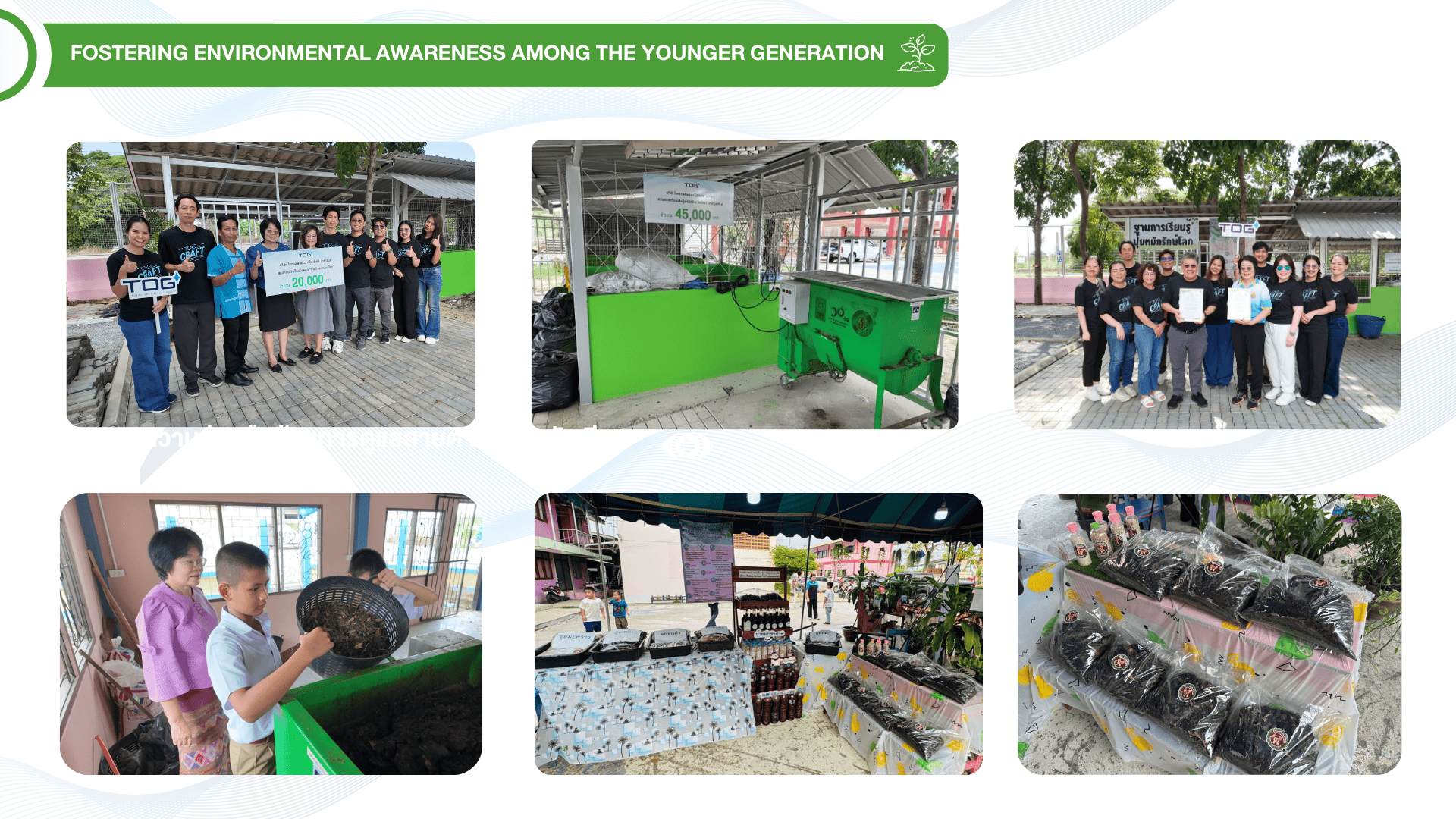
Thai Optical Group Public Company Limited (TOG), in collaboration with Jareonratupatham School, Bang Bua Thong, Nonthaburi, implemented an organic waste–to–compost project to reduce organic waste and promote efficient resource utilisation. The project provided knowledge on waste segregation and compost production from food waste, along with support for composting equipment. The objectives were to reduce the volume of organic waste, encourage effective use of waste resources, and foster environmental conservation awareness among students and school personnel.
In 2025, TOG further expanded the project by supporting the construction of a compost storage greenhouse and received project certification under the Low Emission Support Scheme (LESS) from the Thailand Greenhouse Gas Management Organisation (Public Organisation). The project was able to reduce and sequester greenhouse gas emissions by 3,253 kgCO2eq. In addition, the project participated in a social impact assessment using the Social Impact Footprint (SIF) tool in collaboration with Thaipat Institute. The assessment results indicated a net social capital value of THB 48,149 and a project confidence score of 71.25%, classified at a very good level, while also generating a very high level of satisfaction among stakeholders.
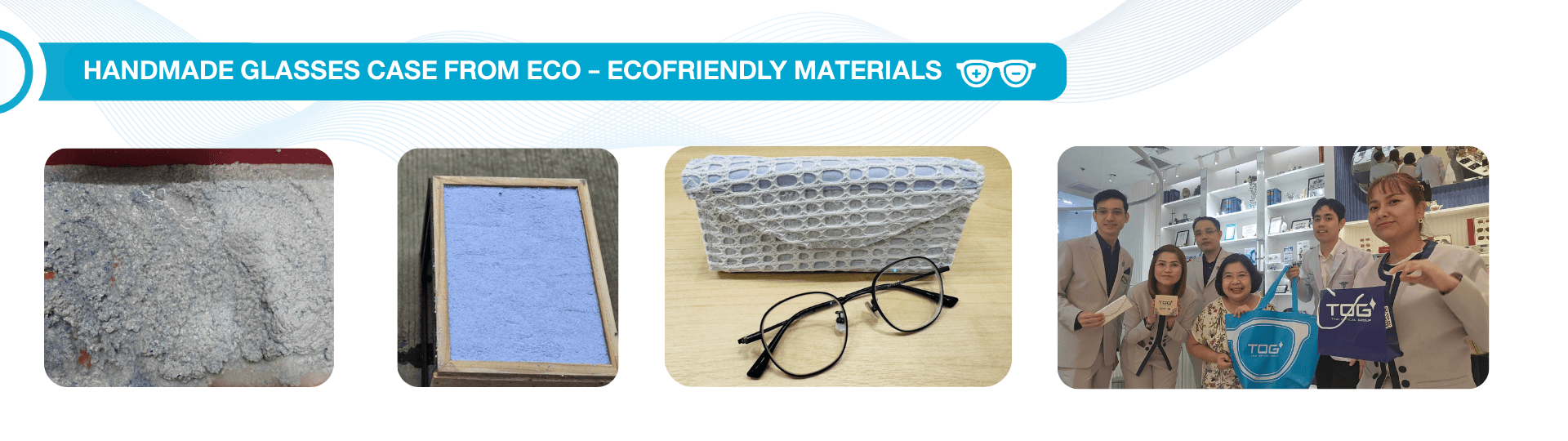
Handmade Glasses Case from Eco-Friendly Materials
TOG transforms used A4 office paper and unused lens packaging boxes generated from internal operations through an upcycling process into handmade glasses cases. The production is carried out in collaboration with local communities in Nong Khaem District, Bangkok, and Khlong Kluea Subdistrict, Nonthaburi Province. The handmade glasses cases are used as packaging for eyewear and delivered to customers’ optical shops. This initiative helps reduce the use of new packaging materials, minimise waste generated from internal operations, and create shared value between the company and local communities in a tangible way.
1. Community Benefits
Quantitative Impact
Production income for the communities: THB 48,000 per 100 pieces
Number of participating communities: 2 communities
Qualitative Impact
Generates additional income and supplementary occupations for local communities.
Enhances skills in production, handicrafts, and product quality control.
2. Organisational Benefits
Quantitative Impact
Reduction of greenhouse gas (GHG) emissions from paper landfill: 14 kgCO2eq.
Adds value to products and enhances customer experience through environmentally friendly packaging.
Qualitative Impact
Encourages employee participation in efficient resource management and greater environmental awareness.
Strengthens relationships between the organisation and local communities, fostering sustainable and inclusive growth.
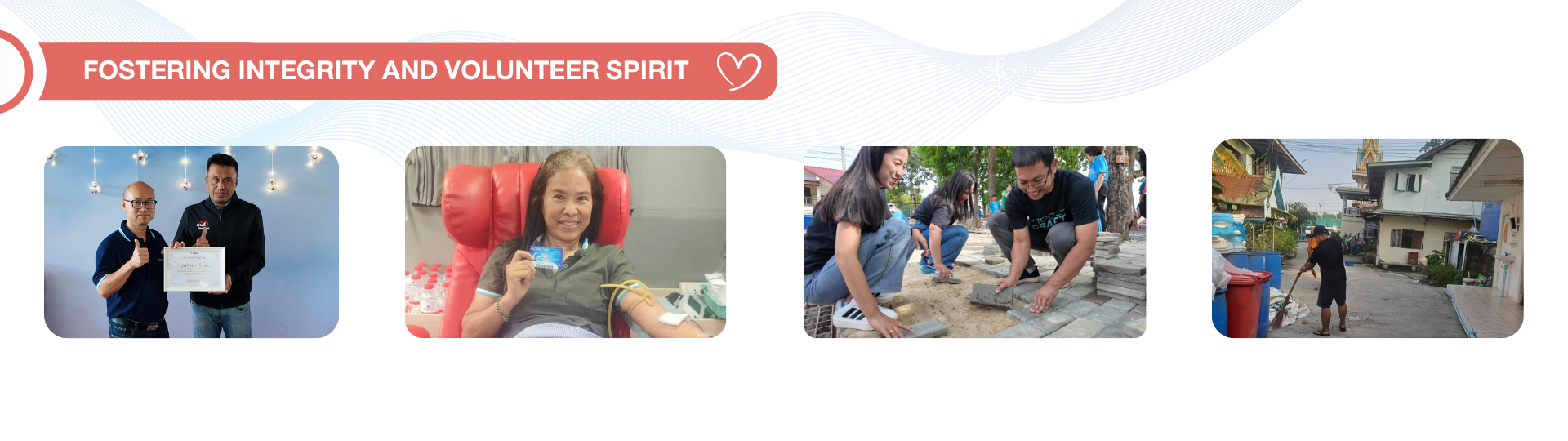
Fostering Integrity and Volunteer Spirit
In 2025, TOG continuously implemented the “Good Deeds Stamp” project to promote an organizational culture grounded in integrity, ethics, and volunteerism. The initiative received positive engagement from employees by allowing them to collect stamps through sharing experiences of good deeds, such as community service, blood donation, returning lost items, reporting misconduct, or providing whistleblowing information to mitigate corruption risks.
The project enhanced employee engagement and instilled a strong sense of social responsibility throughout the year. Employees could redeem accumulated stamps for souvenirs as ongoing motivation. In 2025, the project successfully collected a total of 289 stamps , reflecting TOG’s commitment to fostering an ethical, values-driven organisational culture. In addition, certificates of recognition were awarded to employees who accumulated the highest number of Good Deeds Stamps to honour their contributions and serve as positive role models within the organisation.
Plan Areas
| Plan Area | Other — Please Specify |
|---|---|
| Employment and professional skill development | |
| Education | |
| Religion and culture | |
| Sports and recreation | |
| Occupational health, safety, health, and quality of life | |
| Disadvantaged and vulnerable groups | |
| Water and sanitation management | |
| Others | Environmental Sustainability |
Community & Social — Targets
Has Set Community & Social Targets
Yes
Targets
| Indicator | Target Areas | Target Year | Target Year — Description |
|---|---|---|---|
| 100% of TOG operational sites in Thailand implement active engagement programs for local communities and vulnerable groups | 3037 · Description: Education · 3041 · Description: Occupational health, safety, health, and quality of life · 3042 · Description: Disadvantaged and vulnerable groups | 2,025 | Percentage of operational sites with active community and vulnerable group engagement programs. |
Community & Social — Performance & Outcomes
Has Performance Results
Yes
Performance Description
In 2025, TOG achieved 100% coverage of active engagement programs across all operational sites in Thailand, fostering strong relationships with local communities and addressing the needs of vulnerable groups. These initiatives included regular dialogues with village leaders, collaborations with village health volunteers, and programs tailored to empower people with disabilities. By maintaining comprehensive engagement at every site, TOG reinforces its commitment to inclusivity, trust-building, and sustainable community development.
Law Violation Incidents
Law Violation Incidents
| Metric | Current Year | Previous Year | Two Years Ago |
|---|---|---|---|
| The total number of cases or incidents of significant violations of laws or regulations regarding social and human rights (Cases) | 0 | 0 | 0 |
| The total number of cases or incidents that cause significant labor disputes (Cases) | 0 | 0 | 0 |
| The total number of cases or complaints related to consumer rights violations (Cases) | 0 | 0 | 0 |
| The total number of cases or complaints related to partner rights violations (Cases) | 0 | 0 | 0 |
| The total number of cases or incidents that cause disputes with the community/society (Cases) | 0 | 0 | 0 |
| The total number of cases or incidents related to cyber security or customer data breaches (Cases) | 0 | 0 | 0 |
| The total number of cases or incidents related to safety and occupational health at work (Cases) | 0 | 0 | 0 |